Contact Points

Contact Points · Basis NZ

Contact points for 1920s–1980s classic cars

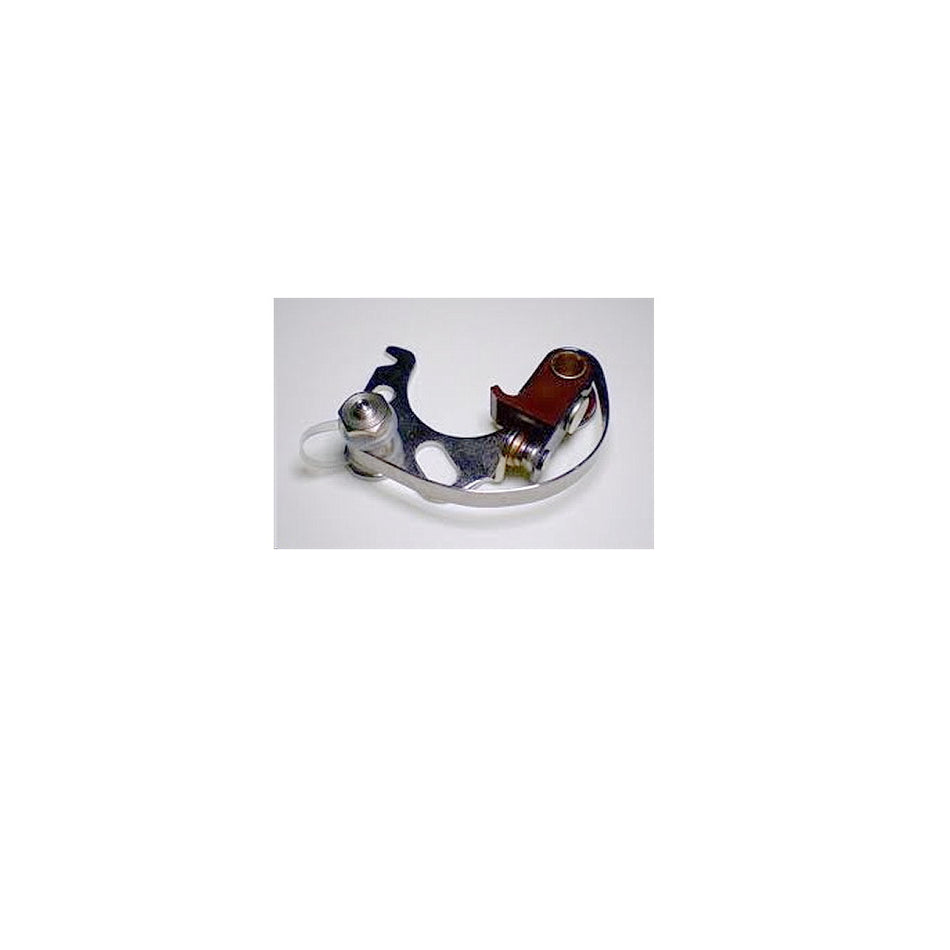
Contact points (contact breakers) open and close the coil circuit every time a cylinder fires, which makes them the busiest moving part in a classic ignition. They burn, pit and wear, and the gap drifts, so the timing wanders and the engine runs rough or will not start. Basis stocks contact points for cars from the 1920s to the 1980s.

Replace the points together with a new condenser, then set the gap and check the timing. Set the gap with a feeler gauge to the figure in your workshop manual — it varies between engines — wipe the contact faces clean and put a smear of cam lubricant on the cam.

Fitting checklist

  • Fit a new condenser with the points
  • Gap with a feeler gauge to the manual figure
  • Clean any oil or grease off the contact faces
  • Light smear of cam lubricant on the cam
  • Re-check ignition timing after fitting
  • Replace the cap and rotor arm if worn

Stocked for 1920s to 1980s

  • 1920s

    Coil-and-distributor and magneto ignition side by side.

    Austin Seven · Morris Cowley · Ford Model T & A

  • 1930s

    Coil ignition becomes the norm on family cars.

    MG · Riley · Austin Ten · Ford Model Y

  • 1940s

    Post-war production restarts on pre-war ignition designs.

    Morris Minor · Austin A40 · Standard Vanguard

  • 1950s

    Centrifugal and vacuum advance distributors are standard.

    Ford Zephyr · MGA · Hillman Minx · Austin A35

  • 1960s

    Contact-breaker ignition in every volume car as 12-volt systems take over from 6-volt.

    Mini · MGB · Triumph Herald · Ford Cortina

  • 1970s–80s

    Last decade of points as standard, then electronic ignition takes over.

    Triumph Spitfire · Land Rover Series III · Mini

53 Products