- Pre-war fours
- 12/50 1923–32, 1,496–1,645cc, around 3,700 built · 12/60 1931–32, 282 built · Firefly 1932–34, 1,496cc, 69 × 100mm · Firebird 1934–36, 1,842cc, 73 × 110mm, around 450 built · 12/70 1937–40, 1,842cc, around 750 built.
- Pre-war sixes
- Silver Eagle 1929–36 · Crested Eagle 1933–39, 602 chassis · Speed 20 1932–36, 1,165 built across SA, SB, SC and SD · Speed 25 1936–40, 3,571cc, 83 × 110mm, 106bhp · 4.3 Litre 1936–40, 4,387cc, 92 × 110mm, 137bhp — the largest and fastest pre-war Alvis.
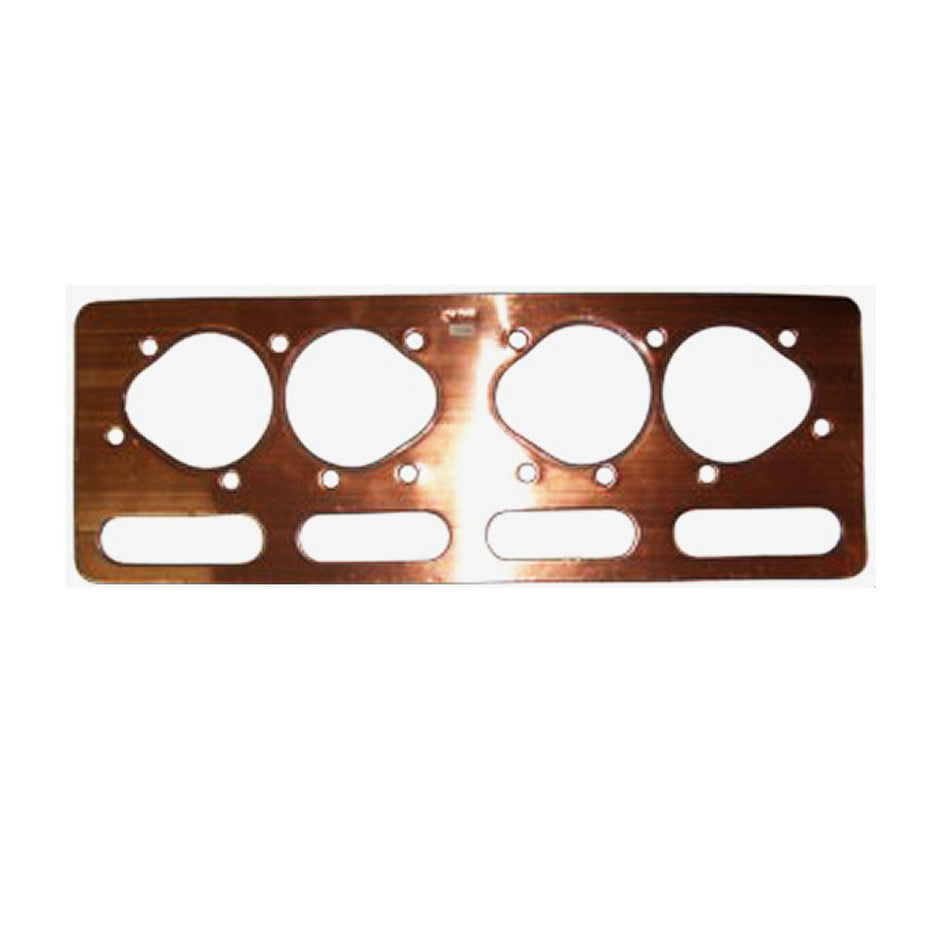
- That head gasket
- The “Alvis 12 & 14hp” gasket suits the 1,842cc and 1,892cc fours — Firebird, 12/70 and TA14, 73mm and 74mm bore. It does not suit a Firefly, which is 69mm. Check your bore before ordering.
- TA14
- 1946–1950, 3,311 built. 1,892cc four, 74 × 110mm, 65bhp, single SU H4. Four-speed, synchromesh on the top three. Girling mechanical (rod) drums, twin leading shoe, all round. Beam axle and leaf springs front and rear. Separate chassis, 108in.
- TB14
- 1950 only, 100 built. TA14 running gear, twin SU, 68bhp. Body by A. P. Metalcraft of Coventry — rear-hinged cut-away doors, fold-flat screen, concealed headlamps. Girling brakes.
- TA21
- 1950–1953, 1,316 built including 302 dropheads. New 2,993cc six, 84 × 90mm, seven main bearings and the timing gears at the rear of the block. Single Solex at launch, twin SU H4 later. Lockheed hydraulic 11in drums — the first hydraulic brakes on an Alvis. Independent coil-and-wishbone front, leaf rear. Separate chassis, 111.5in.
- TB21
- 1951, 31 built, most exported. TA21 running gear, single SU, 90bhp, 3.77:1 final drive. Body by A. P. Metalcraft.
- TC21 & TC21/100
- 1953–1955. 2,993cc six, twin SU, 100bhp. The /100 “Grey Lady” adds 8:1 compression, a better exhaust, 3.77:1 final drive, bonnet air scoops and wire wheels as standard. Lockheed 11in drums, twin leading shoe, 189 sq in. Lucas 12 volt, 63Ah. No synchromesh on first. No Alvis with discs yet.
- TC108G
- 1955–1958, 31 chassis. Graber design built under licence by Willowbrook of Loughborough — metal over a traditional wooden frame, in very small numbers. 104bhp.
- TD21 Series I
- 1958–1961, around 784 built. 2,993cc, twin SU H6, 115bhp on the revised 1959 head with individual rather than siamesed inlet ports; external oil filter fitted during 1959. BMC four-speed, Borg Warner automatic optional, Laycock overdrive late 1960 to 1962. Brakes: starts on drums, gains servo front discs with drums at the rear — an option before it was standard, so check car by car. Bodies by Park Ward, some by Graber.
- TD21 Series II
- 1962–1963, 285 built. Dunlop discs all round — 11.5in front, 11in rear, calipers shared with contemporary Jaguars. ZF five-speed all-synchromesh from October 1962, automatic still optional. Aluminium doors, built-in fog lamps. Note the two changes are not the same date: an early Series II can be disc-braked with the four-speed.
- TE21
- 1963–1966, 352 built. 2,993cc, twin SU, 130bhp, seven thin-shell mains. ZF five-speed or Borg Warner automatic. Dunlop servo discs all round. Burman recirculating ball, ZF power steering optional from late 1964. 12 volt, 51Ah. Identified by the twin headlamps stacked vertically. Park Ward bodies; only three Graber cabriolets.
- TF21
- 1966–1967, 106 built — the last and fastest Alvis. 2,993cc with triple SU, 9.1:1, 150bhp @ 4750rpm, 185lb ft. Electric cooling fan, heated inlet manifold. ZF five-speed or automatic. Discs all round, 11.50in front and 11.02in rear. 12 volt, 57Ah, not the TE21’s 51Ah. Instruments moved in front of the driver.
- Brakes, the whole range
- TA14 and TB14: Girling, mechanical, drums. TA21, TB21, TC21, TC21/100: Lockheed hydraulic, 11in drums. TD21 Series I: drums, then servo front discs with rear drums — check the car. TD21 Series II, TE21, TF21: Dunlop servo discs all round.
- Bodies
- Mulliners of Birmingham · Tickford · Carbodies · A. P. Metalcraft · Duncan · Mead · Willowbrook · Park Ward and Mulliner Park Ward · Carrosserie Graber, Wichtrach. Body rubber, glass, brightwork, hood frames and door furniture follow the coachbuilder, not the model.
- Chassis
-
Every post-war Alvis is separate-chassis, body on frame. There is no monocoque Alvis. 108in on the TA14, 111.5in on everything from the TA21 on.
- Electrics
- Lucas 12 volt throughout the post-war range. Earth polarity is not documented in any source we could check, and many cars have been converted — confirm yours before ordering electrical parts.
- Works records
- Red Triangle at Kenilworth holds the factory spares stock, nearly 22,000 individual car records and over 50,000 works drawings and data sheets. A chassis number will get you your own car’s build record — worth doing before you order body parts.
- In New Zealand
- The Alvis Car Club of New Zealand was founded at Avondale, Auckland on 13 September 1969 and looks after around a hundred cars, vintage through to the TD21. A 1923 12/40 is recorded as the first brand new Alvis imported into the country. No New Zealand agent or distributor is documented — cars came in individually.