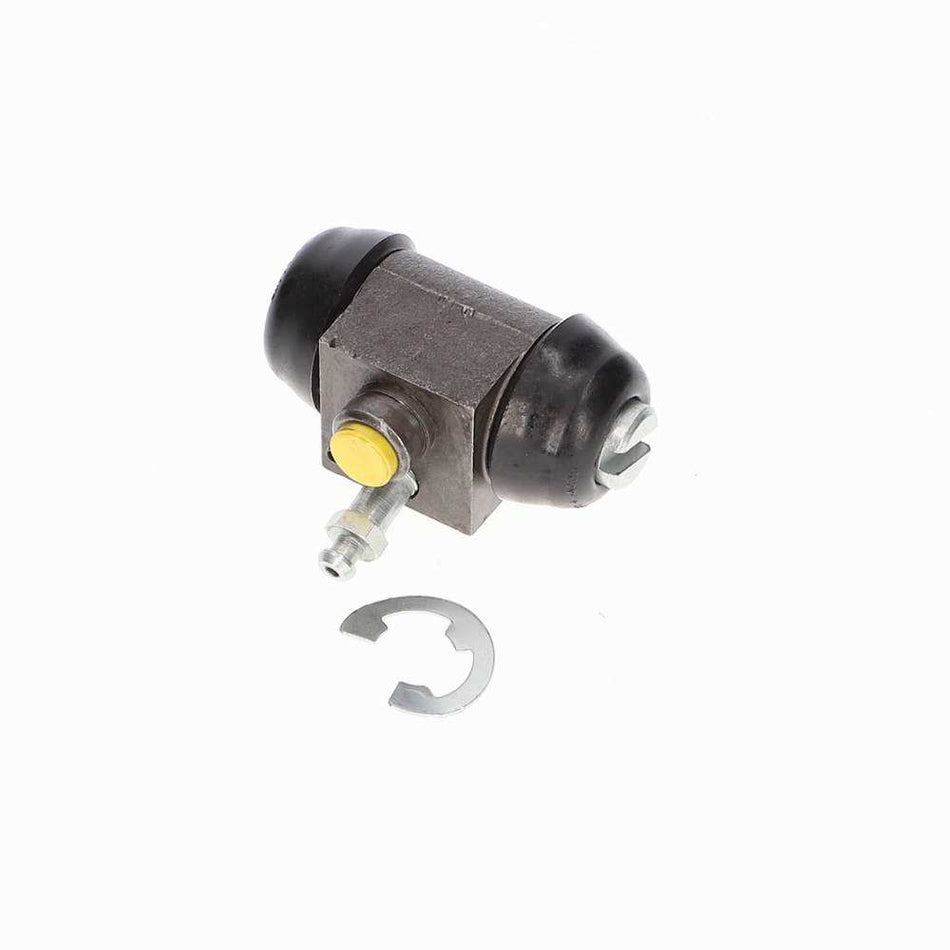
Base cars have drums all round. From the 1300GT up you get front discs. Nothing on any of them has a disc at the rear.
Production began at Halewood late in 1967 and the car was shown at Brussels in January 1968, with continental production from Genk in September 1968 and Saarlouis from 16 January 1970. The everyday engines are all Kent crossflow overhead-valve: 940cc for France, 1098cc at 43–45bhp, 1298cc rising to 57bhp from 1970 and 75bhp in GT form, and 1598cc. The specials are where it gets interesting: the Twin Cam of February 1968 with the Lotus-Ford 1558cc twin-cam at 105bhp and 115mph; the RS1600 of April 1970 with the Cosworth BDA 1599cc sixteen-valve, 120bhp; the Mexico of November 1970, the affordable one, on an 86bhp 1.6 Kent crossflow; and the RS2000 of July 1973 on the 100bhp 2.0 Pinto.
Two facts answer most Escort enquiries. The first is the rear suspension: a live axle on semi-elliptic leaf springs with telescopic dampers, on every single model, both marks, no exceptions. MacPherson strut front, rack and pinion steering. The second is the brakes: base cars are drums all round; the 1300GT and up get front discs; the Twin Cam and the RS cars get bigger front discs with a servo — and rear drums throughout. There is no rear-disc Escort in this period. One thing to watch on a bodyshell: 1973 brought a revised floorpan and suspension, so a late Mk1 is not the same shell as an early one, and the 1300E replaced the GT in 1973. Ford announced the two-millionth Escort in June 1974, sixty per cent of them British-built — the first Ford outside the United States to reach two million. In New Zealand, Seaview built the 1.1 and 1.3 litre cars, saloons and vans; Ford Australia built 67,146 Mk1s from 1970 to 1975.
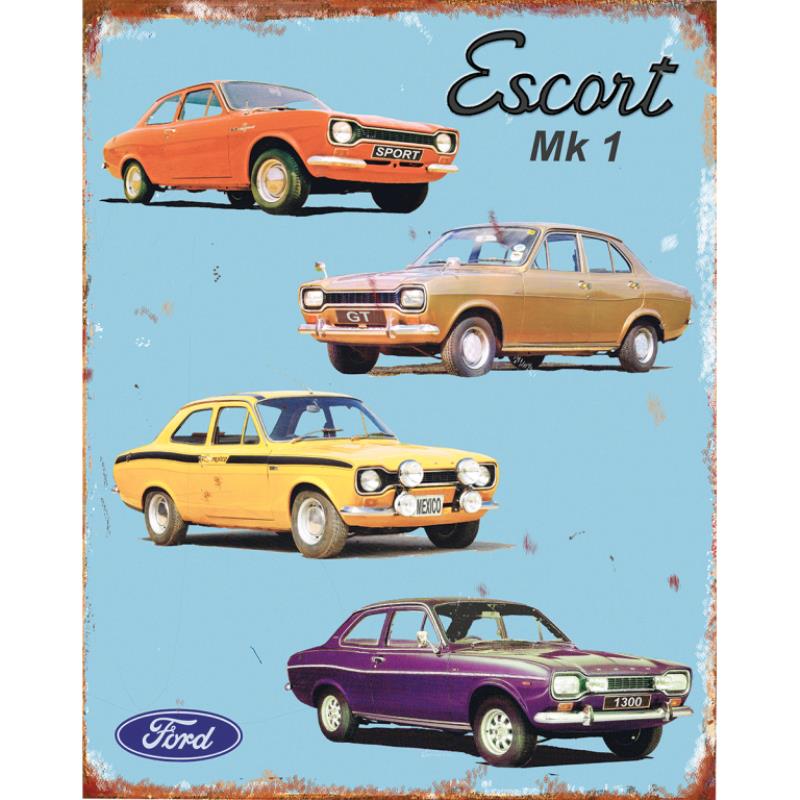
Ford Escort Mk1 — specification & changes within the model
- Brakes
-
Base: drums all round. 1300GT and above: front discs, rear drums. Twin Cam and RS: bigger front discs with servo, rear drums. No Escort of this period has a rear disc.
- Rear suspension
-
Live axle on semi-elliptic leaf springs with telescopic dampers. Every model. Both marks. No exceptions. Front is MacPherson strut with rack and pinion steering.
- Engines
-
Kent crossflow OHV throughout the standard range: 940cc (France), 1098cc 43–45bhp, 1298cc to 57bhp (75bhp GT), 1598cc.
- The specials
-
Twin Cam Feb 1968, Lotus-Ford 1558cc DOHC, 105bhp, 115mph. RS1600 Apr 1970, Cosworth BDA 1599cc 16-valve, 120bhp. Mexico Nov 1970, 86bhp 1.6 Kent crossflow. RS2000 Jul 1973, 100bhp 2.0 Pinto.
- 1973 — a different shell
-
Revised floorpan and suspension in 1973. A late Mk1 is not an early Mk1 underneath. The 1300E replaced the GT the same year.
- Mexico — do not mix them up
-
Mk1 Mexico = 1.6 Kent crossflow. Mk2 Mexico = 1.6 Pinto. Two different engines behind the same badge.
- New Zealand and Australia
-
Seaview, Lower Hutt built the 1.1 and 1.3 litre Mk1, saloons and vans. Ford Australia built 67,146 Mk1s, 1970–75 — two- and four-door saloons and a two-door panel van.