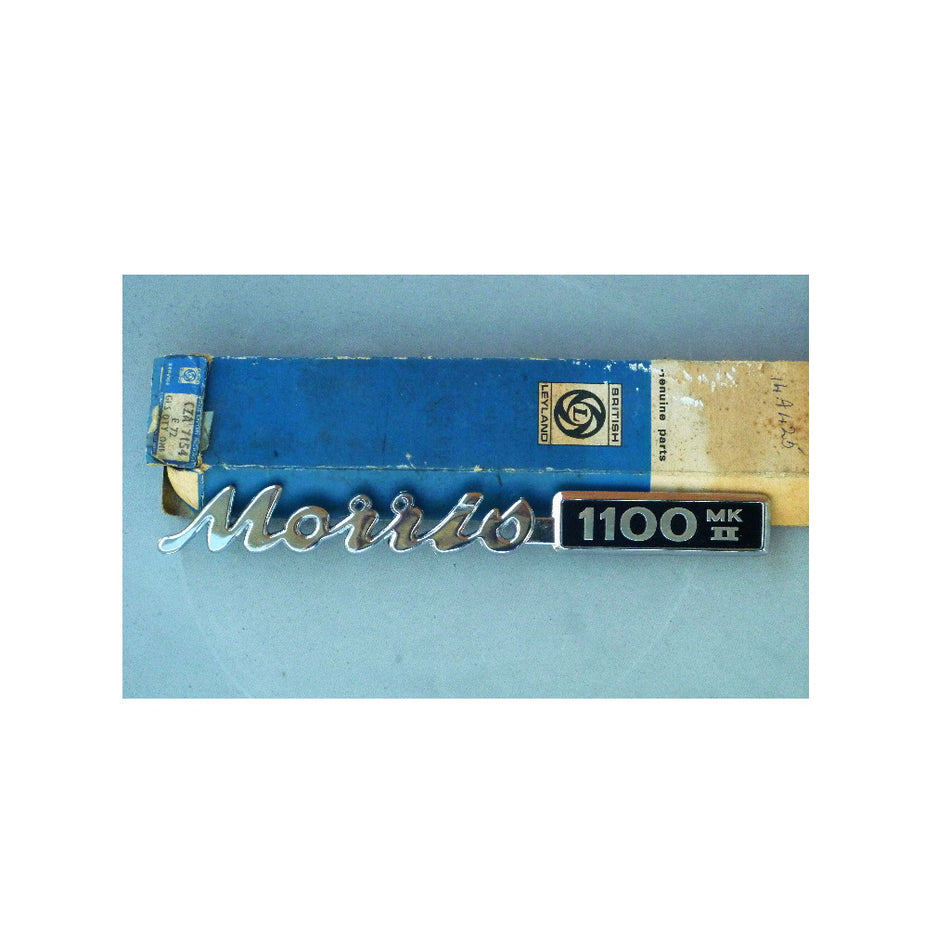
The Morris came first, and that is the opposite of the usual BMC order. Morris 1100, 15 August 1962. MG 1100, October 1962. Austin 1100, September 1963 — thirteen months later. Vanden Plas Princess October 1963, and Wolseley 1100 and Riley Kestrel both September 1965. The “Austin/Morris 1100” shorthand hides it completely.
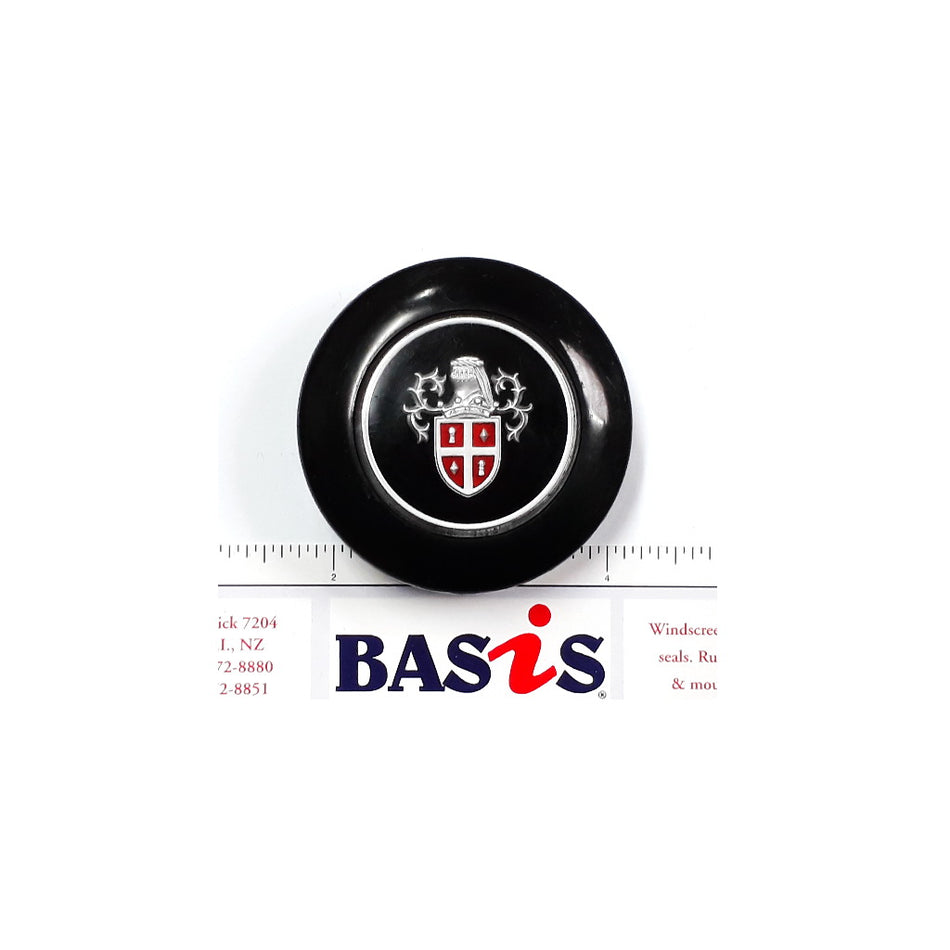
What actually differs between the badges is the carburettor, and very little else. Single SU on the Austin and Morris: 48bhp on the 1098, 58bhp on the 1275. Twin SU on the MG, the Riley and the Vanden Plas: 55bhp on the 1098, 65bhp and then 70bhp from October 1968 on the 1275. The Wolseley started on a single SU HS2 and went to twins later. Carburettors, manifolds, air cleaners and distributors split by badge. Nothing else does. Beyond that: the Austin grille has wavy bars and a coat of arms, the Morris has straight bars; the Morris got a black crackle dashboard from Mk2; the estate is a Countryman on the Austin and a Traveller on the Morris, both from March 1966, and there is no estate version of the Wolseley, Riley, MG or Vanden Plas at all.
The proof that the shell is common is a part number. One front windscreen rubber seal — ARA1392, sold here as ES35 — is catalogued as fitting Austin, Morris, Wolseley, Riley Kestrel, MG and Vanden Plas Princess 1100/1300. One part, six badges, twelve years, Mk1 and Mk2. The October 1967 Mk2 grille and fin changes did not touch the glass aperture. It is a continuous-loop seal.
Mechanically it is one car. 8in (203mm) front discs and rear drums on every model. Hydrolastic interconnected fluid suspension — Moulton’s design, wishbones at the front, front-to-rear interconnection. 12 volt, Lucas, dynamo. Wheelbase 93.5in, 5.50 × 12 tyres. Subframes, brakes, suspension, glass and body rubber are common to all six badges.
The marks, for dating a car quickly. Mk1, 1962 to October 1967 — four-door only at home, two-door was export. Mk2, October 1967 — wider grille extending below the headlamps, badges move from the bonnet to the grille, cropped fins, smoother tail-light fitting, two-door now available at home, simulated wood on the estates. Mk3, September 1971 — range reduction, production to June 1974. Austin and Morris 1300GT from October 1969. The 1275 option reached the upmarket badges in June 1967 and Austin/Morris in October 1967.
And the engine warning, because it is the expensive one. A 1098 A-series block from this car will not fit a Morris Minor, and vice versa. Blocks are not interchangeable between the in-sump transaxle cars and the end-on gearbox cars. Same capacity, same family, different block.
Austin & Morris 1100 and 1300 — specification & changes within the model
- Launch order
-
Morris 1100: 15 August 1962 — first. MG October 1962. Austin September 1963. Vanden Plas October 1963. Wolseley and Riley Kestrel September 1965.
- What differs by badge
-
Carburettors, manifolds, air cleaners and distributors. Single SU on Austin and Morris (48/58bhp); twin SU on MG, Riley and Vanden Plas (55/65, then 70bhp from Oct 1968). Grille, dash and badges. Estate is Austin and Morris only — Countryman and Traveller, both from March 1966.
- What does not differ
-
Shell, glass, body rubber, subframes, Hydrolastic units, 8in front discs and rear drums. One windscreen seal — ARA1392 / ES35 — fits all six badges for twelve years.
- Mechanical specification
-
8in front discs, rear drums, 196.2 sq in rear rubbing area. Hydrolastic, wishbone front, front-to-rear interconnected. 12 volt, Lucas, dynamo. Wheelbase 93.5in, 5.50 × 12 tyres.
- Mk1 / Mk2 / Mk3
-
Mk1 to Oct 1967. Mk2 from Oct 1967 — wider grille below the headlamps, badges to the grille, cropped fins, two-door at home. Mk3 from Sep 1971, to June 1974. 1300GT from Oct 1969.
- The block warning
-
A 1098 from an 1100 will not fit a Minor, Midget or A40, and theirs will not fit this car. In-sump transaxle versus end-on gearbox. Same capacity, different block.
- New Zealand
-
About 42,357 assembled here, CKD at Newmarket and Petone, 1963–1974. That is the largest BMC programme in the country after the Minor.
- Not claimed
-
Earth polarity. We will not guess it. No marque club, period road test or factory document we would stand behind states positive or negative earth for this car. Nominal voltage we can give you — and it is worth saying that the Morris Minor was 12 volt from the first car in 1948 to the last in 1971. Check the car before you order anything polarity-sensitive. 12 volt is confirmed; polarity is not. We also cannot find a source naming the brake maker — the 8in front disc diameter is confirmed, Lockheed or Girling is not — and nothing states whether “Riley Kestrel” was formally dropped for “Riley 1300” mid-run. Search both.