Launched as the Austin Seven, renamed Austin Mini in 1962, and a marque in its own right from 1969.
The Austin-badged Mini arrived on 26 August 1959 as the Austin Seven — often written Se7en — alongside the Morris Mini-Minor, and became the Austin Mini on 1 January 1962. From 1969 Mini was a marque of its own and the Austin and Morris badges came off the saloons. 5,387,862 were built over forty-one years, the last at Longbridge on 4 October 2000. New Zealand took to it early: the first locally assembled cars were launched in February 1960, CKD kits arriving in packs of forty-eight, and 58,793 were assembled here between January 1960 and October 1976 — Austin-badged cars at Petone, Morris cars at Newmarket and later Panmure, with radiators, coils, plugs, batteries, glass, seat frames and trim all sourced locally. Paddy Hopkirk won the 1964 Monte Carlo outright in a Cooper S, and Timo Mäkinen and Rauno Aaltonen repeated it in 1965 and 1967.
Two splits matter more than all the rest. Suspension: rubber cone from launch, Hydrolastic on saloons only from September 1964, and back to rubber cones in stages — the 850 and 1000 in 1969, but the Clubman, 1275GT and Mk3 Cooper S not until 1971. Vans, pick-ups and estates were never Hydrolastic at all. Doors: Mk1 and Mk2 have external hinges and sliding windows; the Mk3 of October 1969 brought larger doors with concealed hinges and wind-up windows, and the three door families share almost nothing — skins, glass, seals, hinges, handles and trim all differ. Then in January 1973 the rod-change gearbox arrived and took the floorpan with it, the tunnel changing from a semi-elliptical to a rectangular profile across the range, which most histories leave out entirely. Australian-built cars are their own puzzle: the wind-up window door of March 1965 keeps external hinges, a combination that does not exist on a British car.
Austin Classic Mini — specification & changes within the model
- Built
- August 1959 – 4 October 2000. 5,387,862 in all. Van 521,494 · pick-up 58,179 · Countryman 108,000 · Clubman saloon 275,583 · Clubman estate 197,606 · 1275GT 110,673.
- Names
- Austin Seven to January 1962 · Austin Mini to 1969 · Mini as a marque of its own from 1969.
- Engines
- A-series, transverse, gearbox in the sump. 848cc (62.9 × 68.26mm) · 998cc (64.58 × 76.2mm) · 997cc Cooper (62.43 × 81.28mm) · 970 and 1071cc Cooper S · 1098cc · 1275cc (70.6 × 81.28mm). A-Plus from 1980.
- Gearbox
- Four-speed. No synchromesh on first until August 1968. Rod change from January 1973, which changed the floorpan. AP automatic from October 1965.
- Suspension
- Rubber cone from 1959 · Hydrolastic on saloons from September 1964 · back to cones on the 850 and 1000 in 1969, and on the Clubman, 1275GT and Cooper S in 1971. Commercials and estates always dry.
- Brakes
- Drums all round on standard cars. Cooper 7in front discs from 1961; Cooper S 7.5in with servo from March 1963. 12in wheels and 8.4in discs on the 1275GT from June 1974, and across the range from 1984.
- Doors
- External hinges and sliding windows to 1969; concealed hinges and wind-up windows from the Mk3, October 1969.
- Subframes
- New rubber-mounted front subframe from May 1976.
- Charging
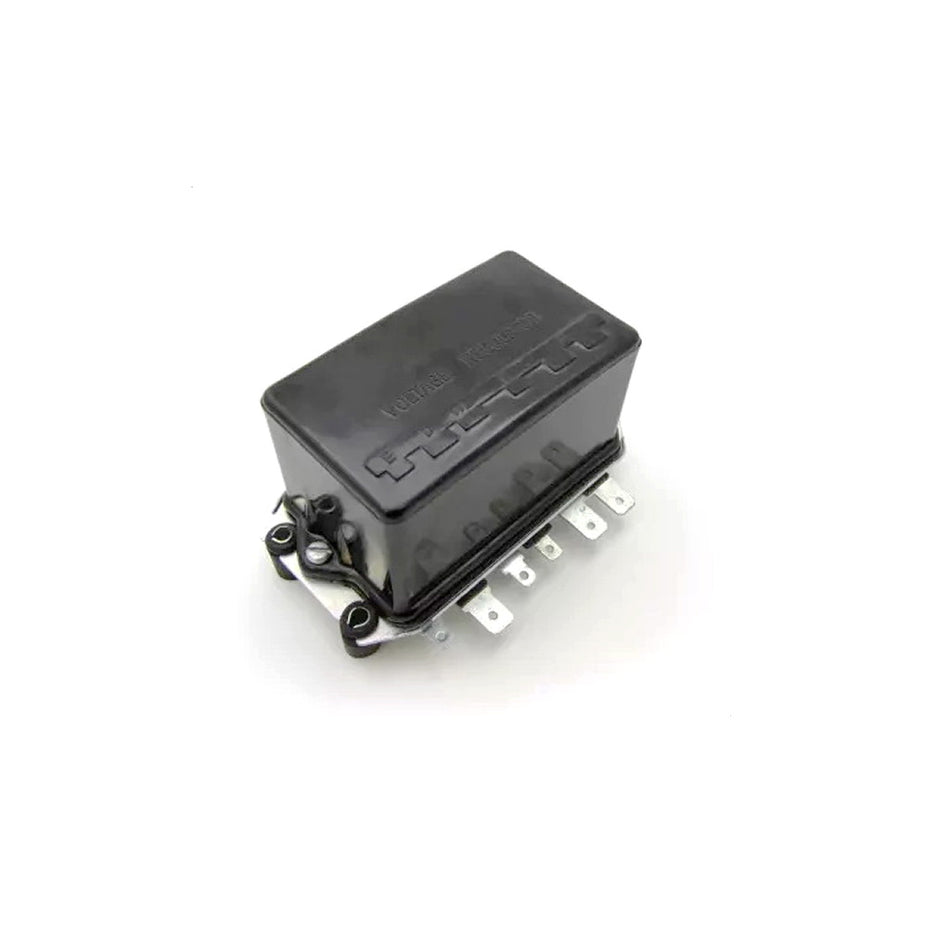
- Dynamo, then alternator standard from January 1973.
- Built here
- Petone for the Austin cars, Newmarket then Panmure for the Morris cars, and Nelson for a time. 58,793 assembled in New Zealand between 1960 and 1976, including the van, the ute, the Clubman and the Clubman GT.